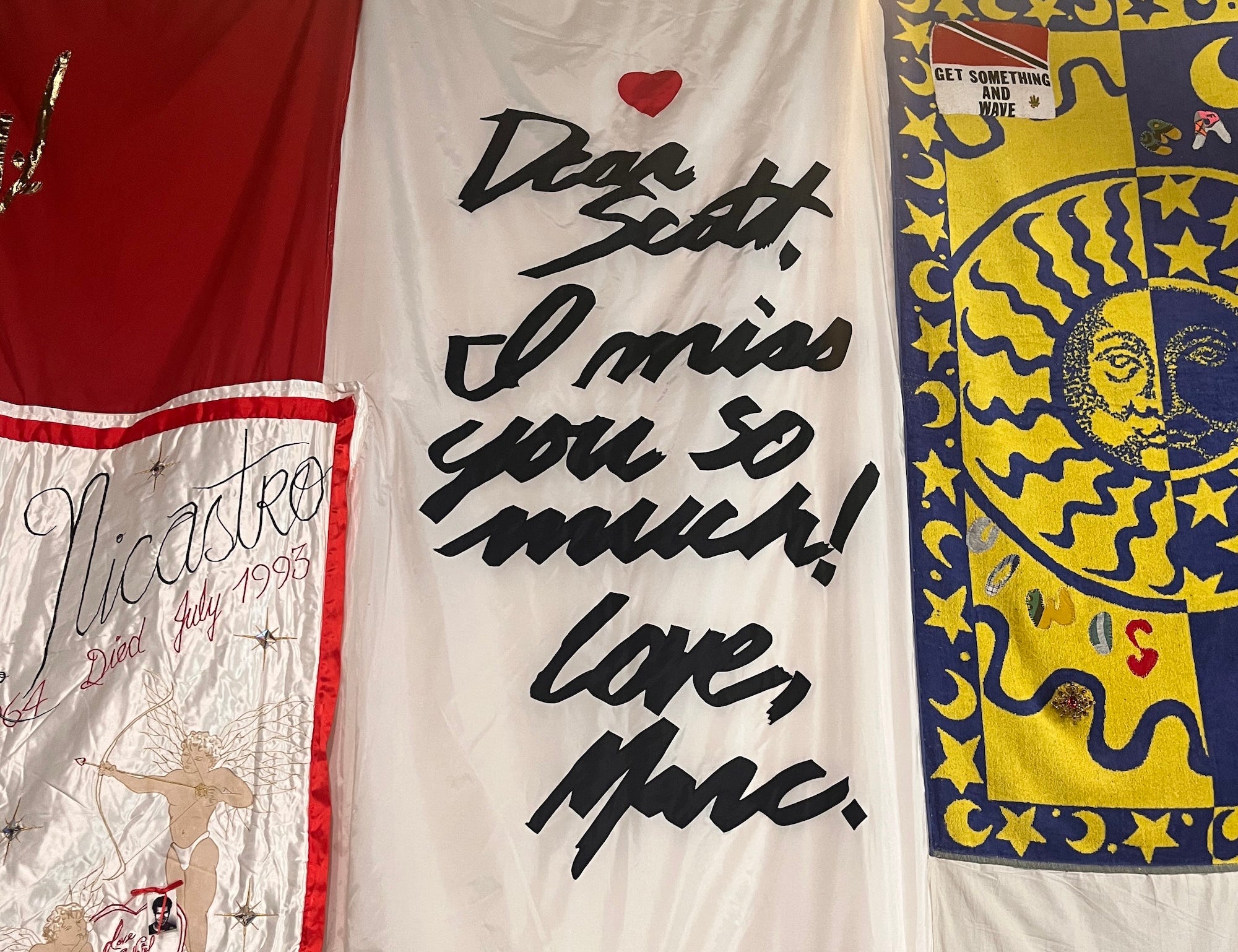
AIDS Memorial Quilts
And me doing drawings in the 80s

I was able to see some of the UK AIDS Memorial Quilt in September at Charleston. There were seven big panels hung within a barn and, because I was on my own, I had time to look at them from afar and up close.
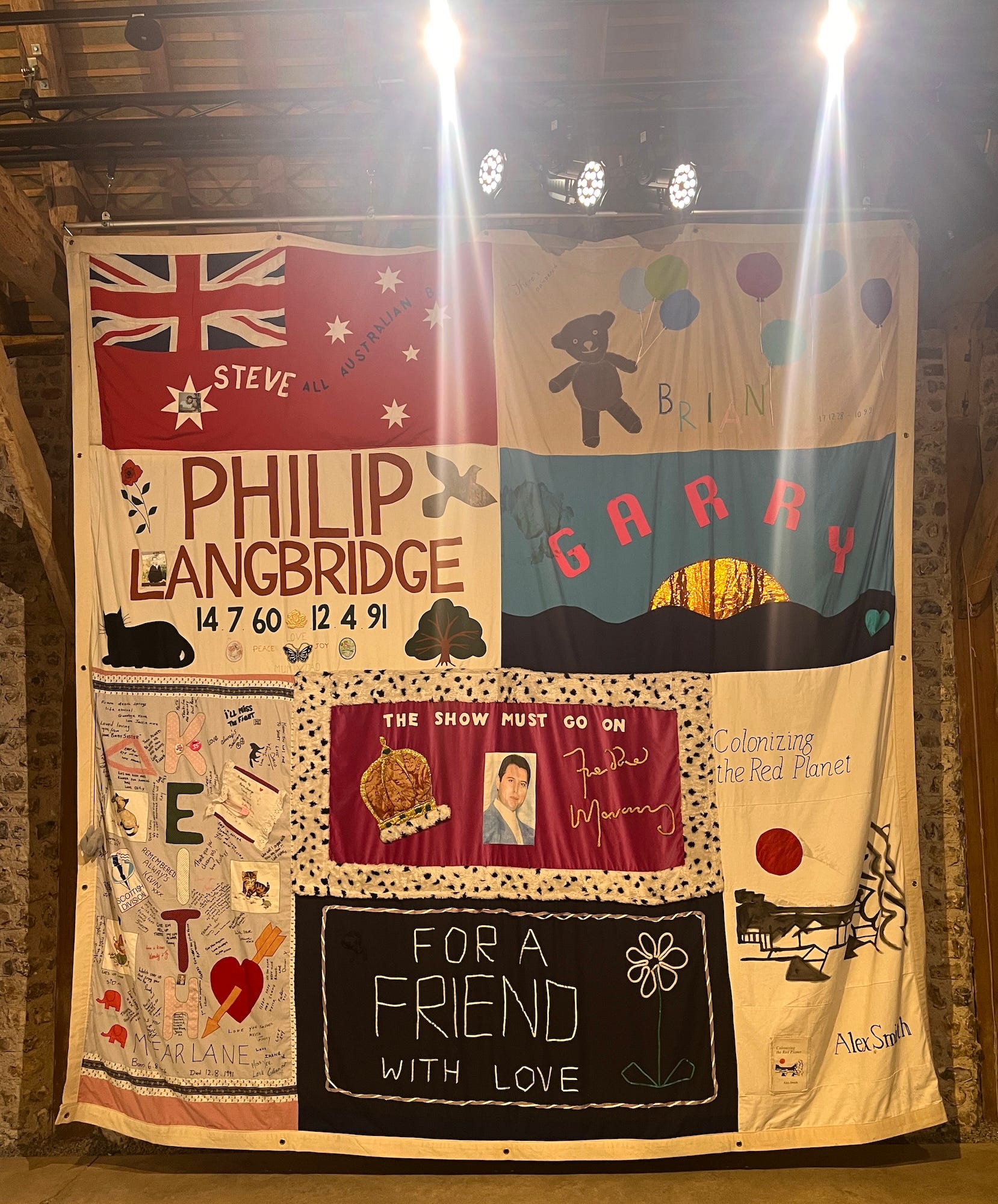
Each panel is a collection of individual sewn pieces. All different, all unique. Each part is for a different person, made by friends or family. Some are funny, some specific, others poetic. Each rectangle remembers a person who died from AIDS in the late 1980s or early 1990s, at a time when memorials were often private so they are beautiful artefacts, doing what craft does best: showing love through the time and care taken to make something.
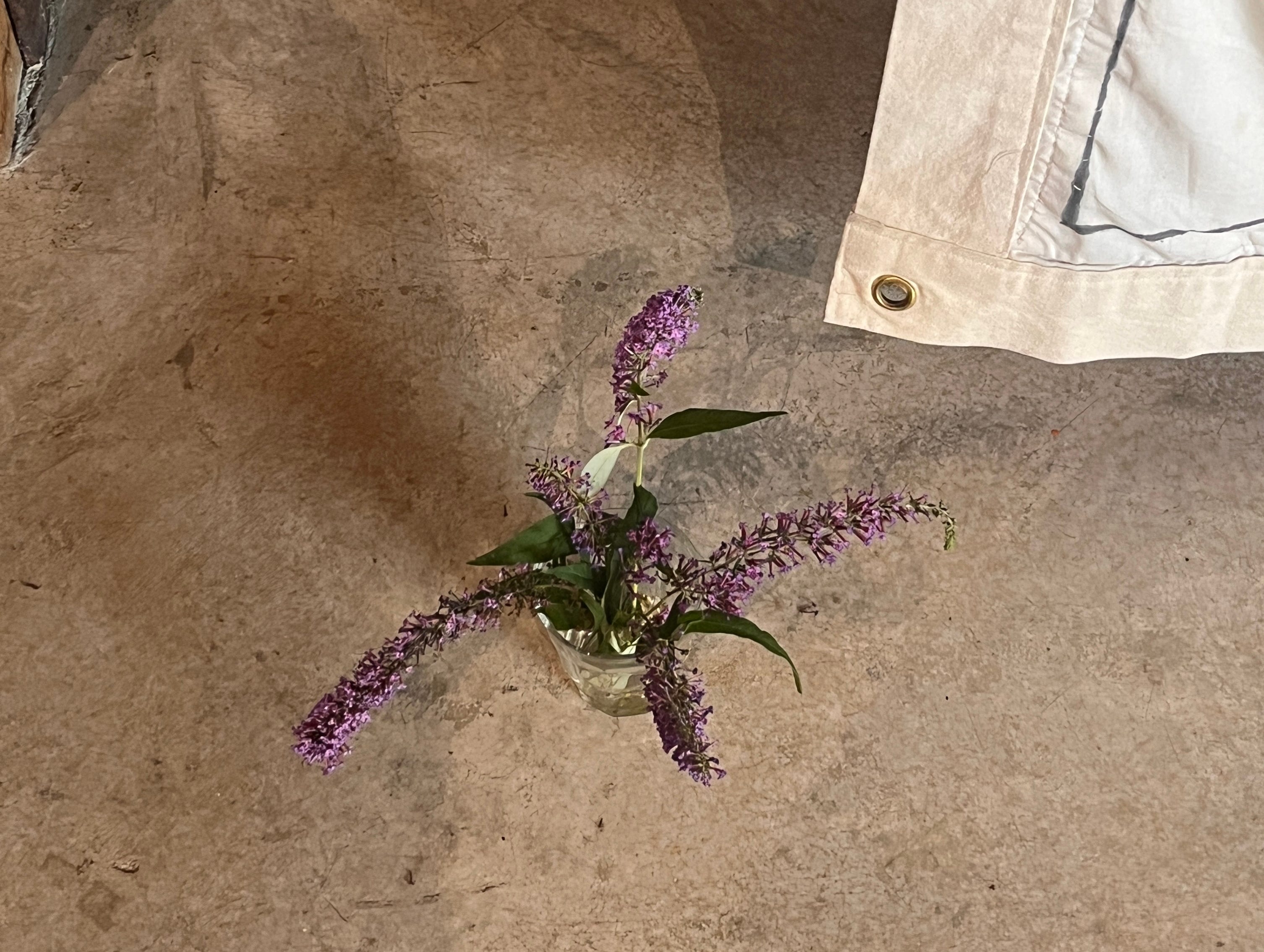
I was feeling a lot of feelings even before I noticed a small vase of buddleia flowers placed beneath the same flowers sewn onto a quilt. Then I met a man called Harry who had sewn one of the panels for his friend Andrea, who died age 26 in 1991, and we talked about what it was like to be sick at that time, the secrecy and judgement and panic.
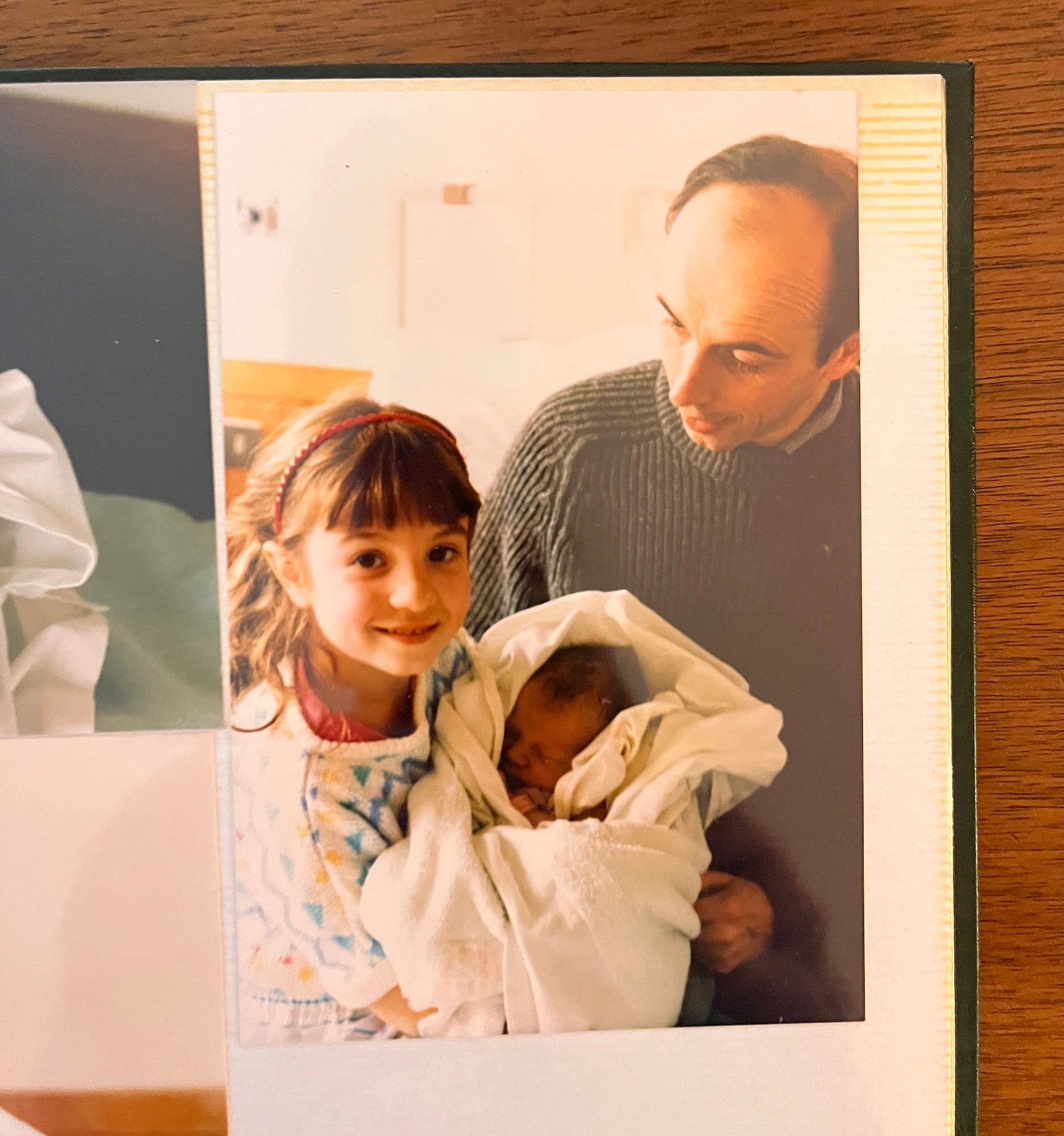
My dad is a (now retired) doctor and he treated patients with AIDS. At first, when the disease was new, there were doctors, nurses, porters and paramedics who didn’t want any contact with AIDS patients. People would wear full protective suits when called to these patients, and sometimes refuse to touch or treat them. I have grown up hearing these stories. For a time, in the mid-late 1980s, there was an AIDS ward in a nearby hospital where my dad did ward rounds, and I would draw pictures for some of the patients and my dad would take me to visit them. I don’t remember it that clearly, but he claims that some of the (mainly) men would stick my pictures by their beds. I remember being maybe eight, or nine, and my parents telling me about AIDS was and I knew some men who had it, and knowing that I mustn’t talk about it outside my family. Not because my parents agreed with the taboo, but because it wasn’t our place to share other people’s medical history. I didn’t tell anyone. Some of the families of those commemorated in the quilt didn’t tell anyone their relative had died of AIDS.
The development of treatments for HIV and AIDS has been an extraordinary medical success. So much has changed over the last forty years, but we know from Covid that there have been, and will be, more panics, and that fear and prejudice combine to alienate people. What’s so affecting about the quilts is the way they show the mundane humanity of people who were vilified at the time. These were people who loved flowers, music, cats, and picnics. It’s an extraordinary project of love and loss, in this most traditional of mediums. Nothing threatening about a quilt, yet these panels shine with radical, fervent power.
UK AIDS Memorial Quilt at Charleston